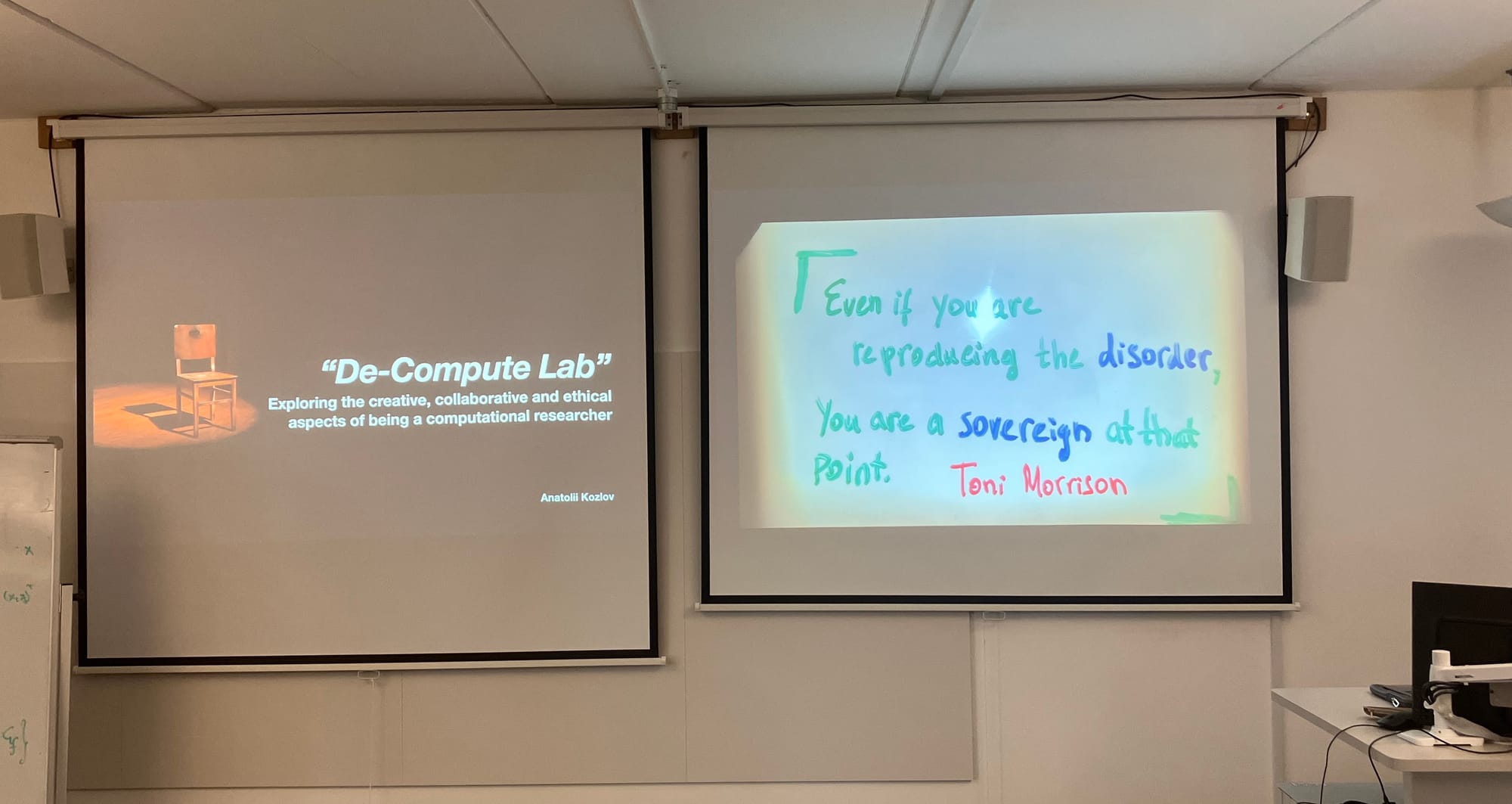
DeCompute Lab is a series of creative workshops for early career researchers in the computational sciences. We explore the philosophical and practical underpinnings of the discipline and the research culture around it.
We play. We think. We talk. We get inspired.
The project is organised with the partnership of Cambridge Enhancing Research Culture and the Department of Computational Science.
Sign up for the session here.
January 26 "The beginning of it all: creativity and curiosity"
Here, we’ll lay the path for the upcoming explorations of investigative mindset and the diverging trajectories of its path. Why do we do research in computational science? How do we research? What do we research? Why there is no such thing as an absolutely solitary researcher? How does the social overlays with individual? Where is human in computational? How to think alone and in the group at the same time? The opening session will give a taste of this mini-course as a playful and creative exploration of layers of meanings baked into the life of an early-career computational researcher, its different facets, difficulties and excitements.
February 4 "Computation and competition: the power of numbers"
Numbers, counting and quantification will be the symbolic centre of this session. We will play around and converse about the idea and the urge for measurements and comparisons and our relationships with numbers: from quantifying time, to measuring distances, to comparing the number of publications and projecting one’s salary aspirations.
February 11 "Give it or take it: data, traces, feelings"
What is data, and why do we trust it? Is data a statement of fact, a trace of a process or symbolic evidence? Here, we will explore the facets and meanings of what we do when we decide to collect, analyse and use various data. To get into the space of creative exploration, we will do some fun visualisations and practice storytelling.
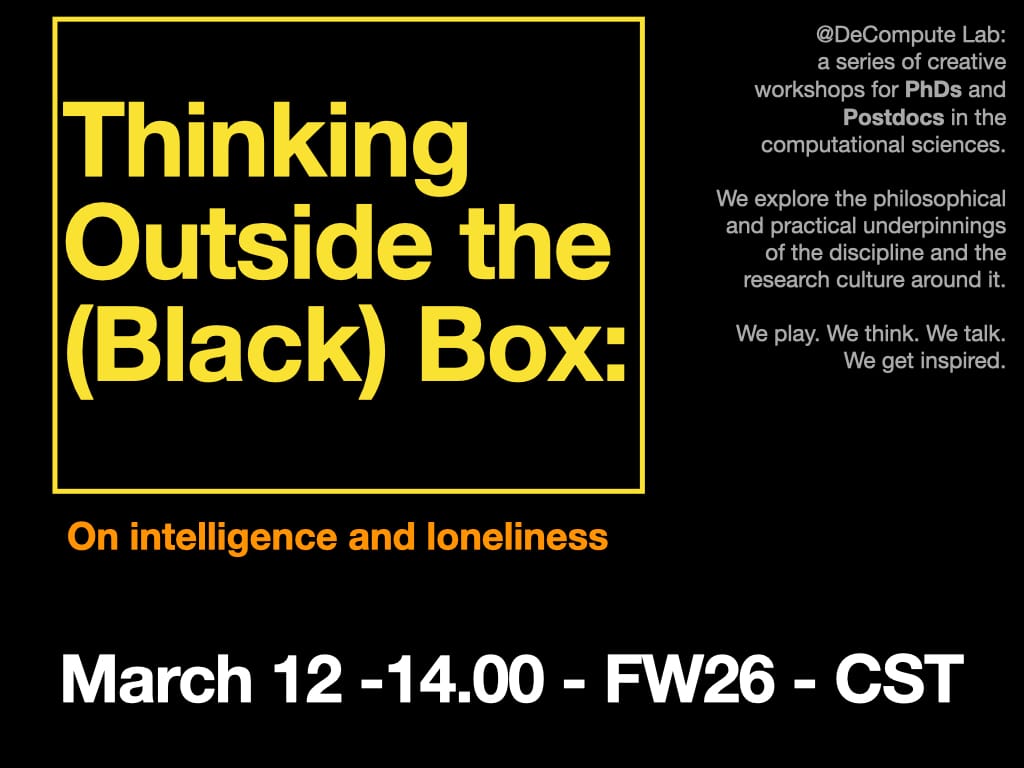
March 12 "Thinking outside the (black) box: on intelligence and loneliness"
AI tools have become firmly entrenched in our research practice, assisting us in dealing with large bulks of data, coding, and writing research articles. In this session, we’ll be searching for our way out of the AI black box by creatively exploring the various facets of intelligence. How do we experience intelligence? How and why do we attribute it? And what does intelligence have to do with dialogues and friendships?
March 19 "Structures we create and structures we inhabit - on research cultures"
In this session, we’ll take a more conscious stance on the structures we create and leave in: research environments and research cultures. Glancing back at previous four sessions, we will explore how agency and responsibility help us navigate the conditions we receive and, potentially, make them more collegial, friendly and inclusive.