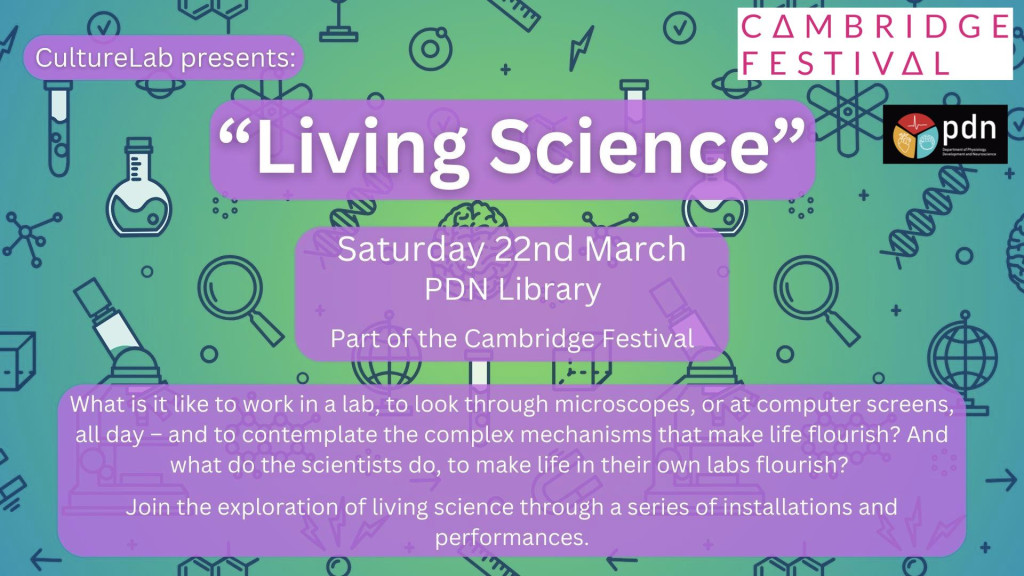
"Living Science" @ Cambridge Festival
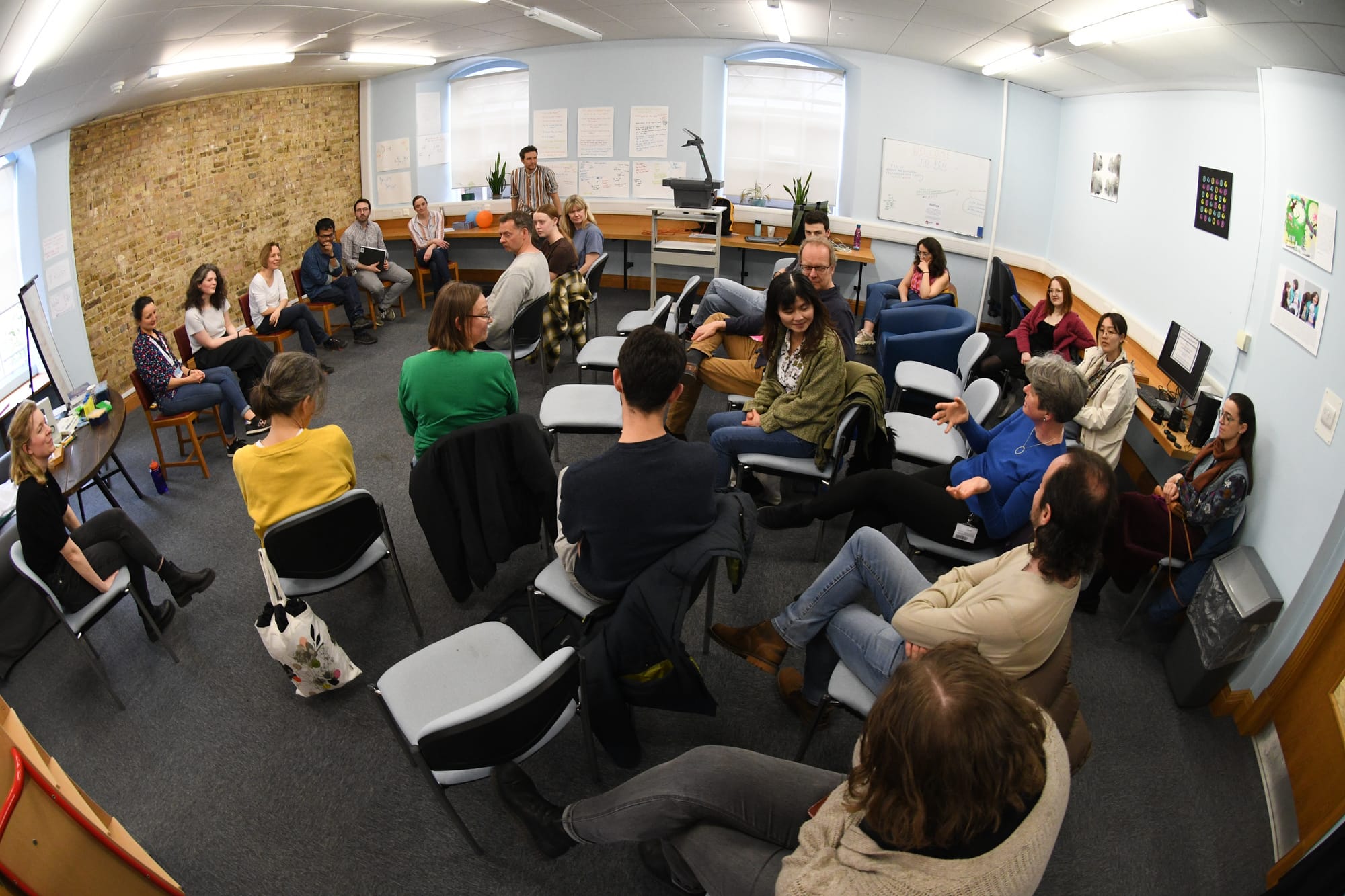
Molecules perform functions to support life. Scientists perform actions to study the molecules. But who are these scientists? What is it to be the one? Come to learn with us at the PDN this Sat (22d) through the exciting performative readings and subsequent discussion!
From the Department of Physiology, Development & Neuroscience (PDN) comes a performative exhibition that tells the scientists’ stories: stories of what it is like to be a researcher focused on molecules, cells, tissues, organs and organisms. The performative exhibition invites you in, behind the luminous curtain of well-ordered scientific knowledge, to explore what it is like to live in science.
The work was devised by PDN scientists during an extended series of creative workshops as a part of the “CultureLab” project.